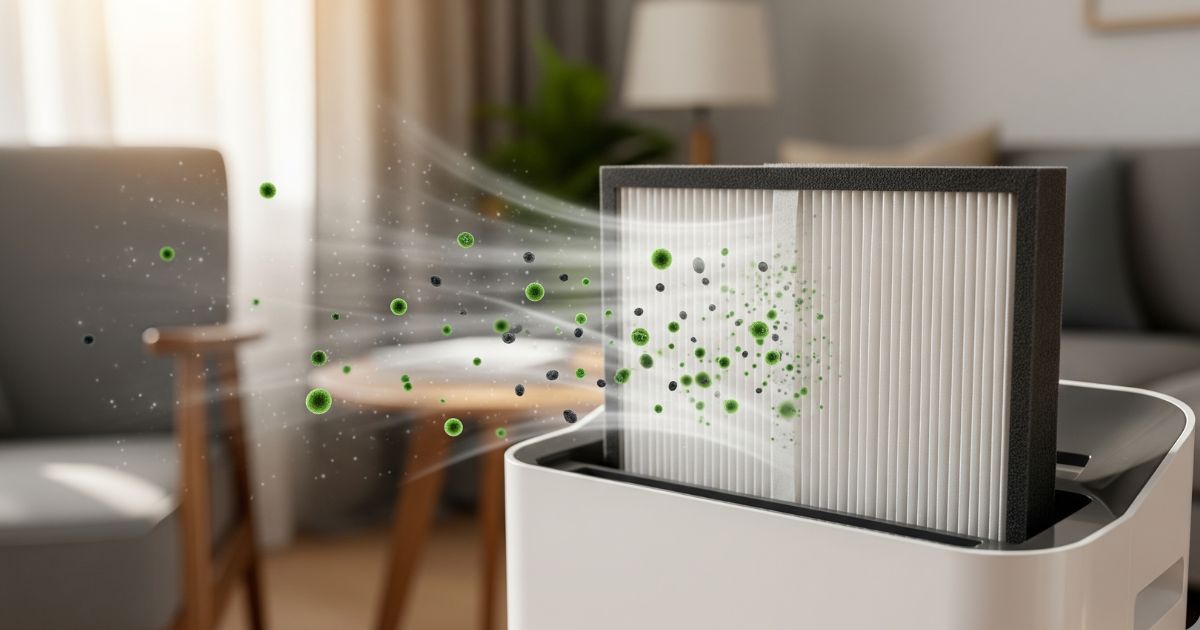
When you find mold in your home or business, your focus immediately shifts to removing the visible problem. But what about the threat you can’t see? Mold reproduces by releasing microscopic spores into the air. These spores can travel throughout your property, degrade air quality, and lead to significant health concerns. This is where the power of HEPA filtration becomes undeniable. A deep understanding of the role of HEPA filters in mold remediation is your best tool for ensuring the air you breathe is genuinely clean and safe.
This ultimate guide will take you through every detail of using HEPA filtration to win the war against mold. We’ll explore the science behind these powerful filters, debunk common myths, and explain why they are a non-negotiable part of any serious mold remediation plan. From choosing the right device to maintaining it for peak performance, you will learn how to restore and maintain a healthy, mold-free environment.
The Unseen Enemy: Understanding Mold Spores
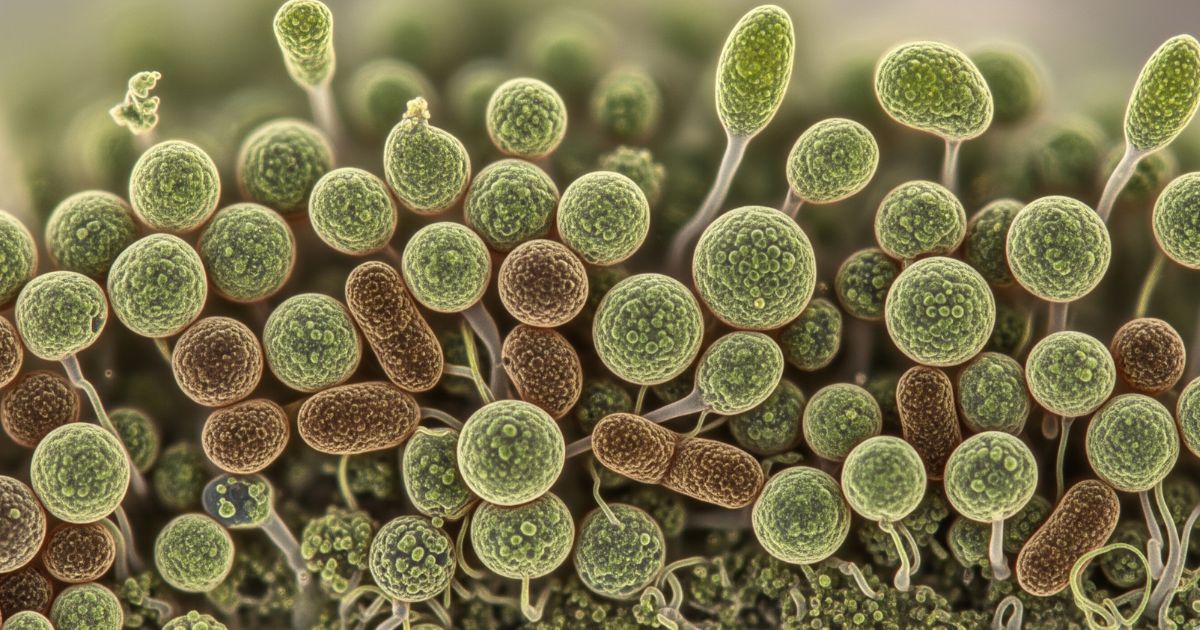
Before we can appreciate the solution, we must understand the problem. Mold is a type of fungus, and its primary goal is to reproduce. It achieves this by releasing spores—tiny, lightweight “seeds”—that can travel effortlessly on air currents.
How Small Are Mold Spores?
Mold spores are incredibly small, typically ranging from 3 to 40 microns. To give you some context, a single human hair is about 50-70 microns in diameter. This microscopic size allows them to remain suspended in the air for long periods and be inhaled deep into the lungs. When they land on a surface with moisture and a food source (like drywall, wood, or dust), they can begin to grow into a new mold colony. This is how a small problem in one corner can quickly spread throughout a building.
The Health Risks of Inhaling Mold Spores
The presence of mold spores in your indoor air is not something to be taken lightly. For many people, inhaling these particles can trigger allergic reactions, including sneezing, runny nose, red eyes, and skin rashes. For individuals with asthma, mold exposure can lead to more frequent and severe attacks.
Beyond allergies, some people are more sensitive to mold and may experience more significant health issues. Certain types of mold can also produce mycotoxins, which can lead to more severe health effects with prolonged exposure. This is why controlling the airborne spore count is just as important as removing the visible mold itself.
What Are HEPA Filters? The Science of Clean Air
HEPA is an acronym that stands for High-Efficiency Particulate Air. This is not just a marketing term; it is a specific standard of filtration defined by the U.S. Department of Energy. A filter must meet a strict performance level to earn the “HEPA” designation.
The Official HEPA Standard
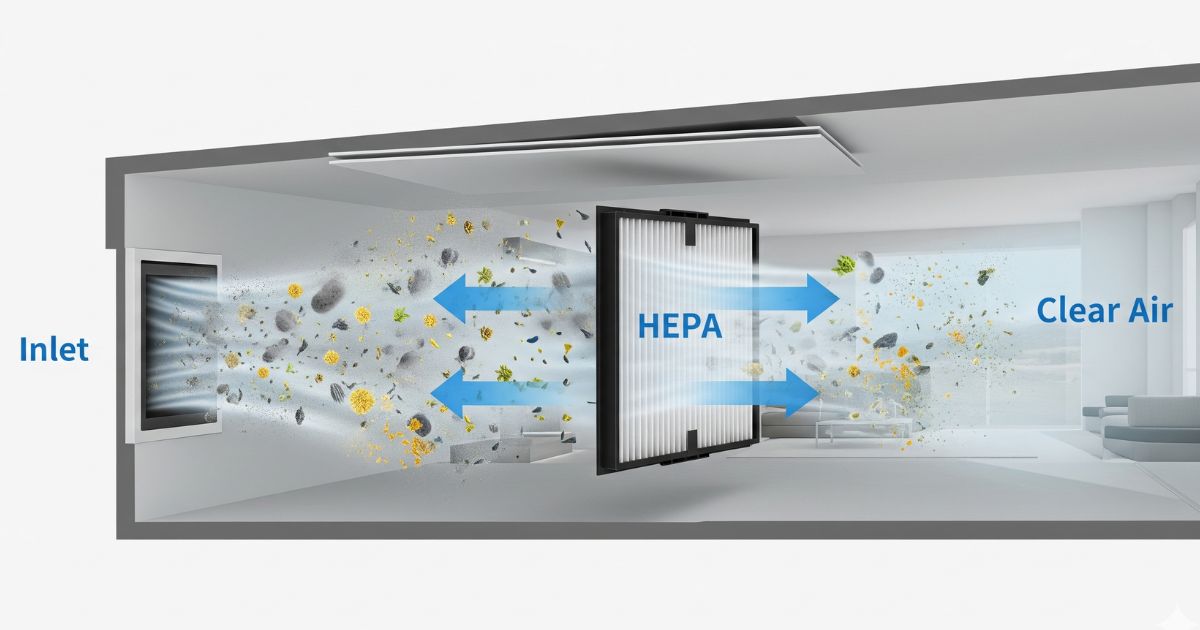
To be classified as a true HEPA filter, it must be tested and proven to capture at least 99.97% of airborne particles that are exactly 0.3 microns in size. This specific particle size is known as the Most Penetrating Particle Size (MPPS). It is the hardest particle size for filters to catch.
You might think smaller particles would be even harder to trap, but that’s not the case due to the physics of air filtration. Because HEPA filters are so effective at this most difficult size, they are even more efficient at capturing both larger and smaller particles. Given that mold spores are much larger than 0.3 microns, a hepa filter for mold is exceptionally effective at pulling them out of the air.
How HEPA Filters Trap Particles
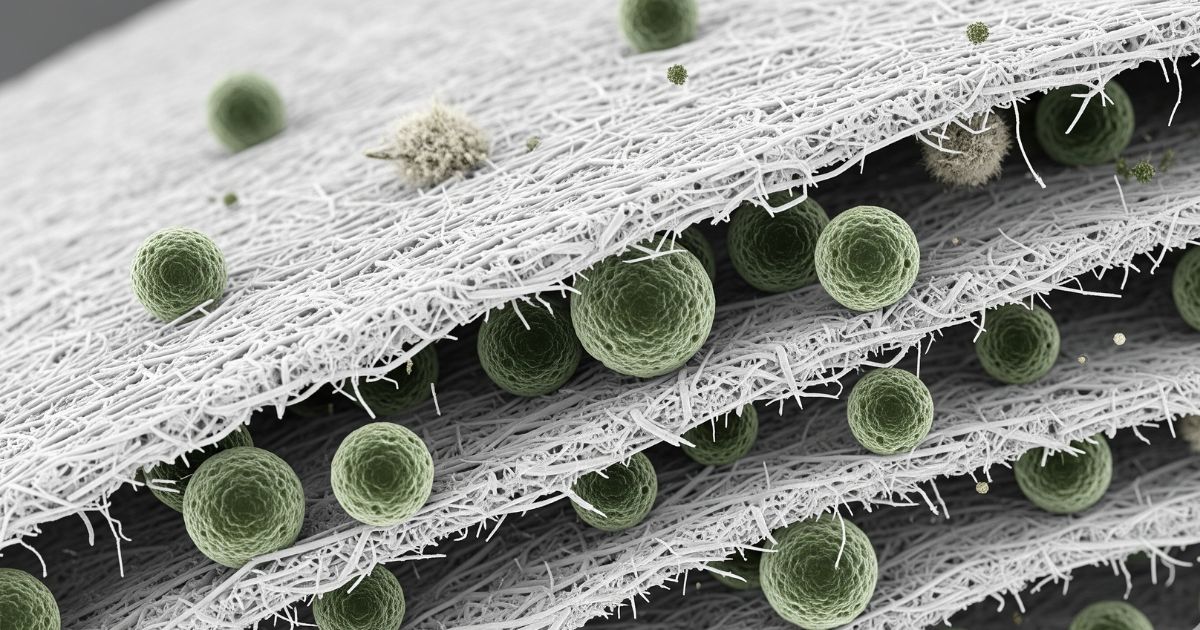
A HEPA filter is not just a simple screen. It consists of a complex mat of randomly arranged glass fibers. As air is forced through this dense web, particles are captured through a combination of three distinct physical mechanisms:
Direct Impaction
Larger particles, like dust, pollen, and most mold spores, have too much inertia to follow the curving air streams around the filter fibers. They travel in a straight line, collide directly with a fiber, and become trapped. This is most effective for particles larger than 1 micron.
Interception
Mid-sized particles are light enough to follow the airflow but will still get stuck if they pass too close to a fiber. As the air stream veers to go around a fiber, the particle follows it, makes contact with the edge of the fiber, and is captured.
Diffusion
The smallest particles, typically those under 0.1 microns, are so light that they are bounced around by gas molecules in the air. This causes them to move in an erratic, random pattern known as Brownian motion. This unpredictable movement makes it highly likely they will eventually collide with and stick to a fiber. This mechanism is why HEPA filters are also effective against viruses and smoke particles.
This three-pronged approach is what makes a hepa filter mold solution the gold standard. It ensures that a vast range of particle sizes, including all types of mold spores, are reliably removed from the air you breathe.
HEPA Filters in Mold Remediation: An Essential Partnership
Professional mold remediation is a systematic process designed to contain and eliminate the problem at its source. A HEPA filter and mold remediation go hand in hand; you simply cannot have a successful project without HEPA technology.
The Principle of Containment
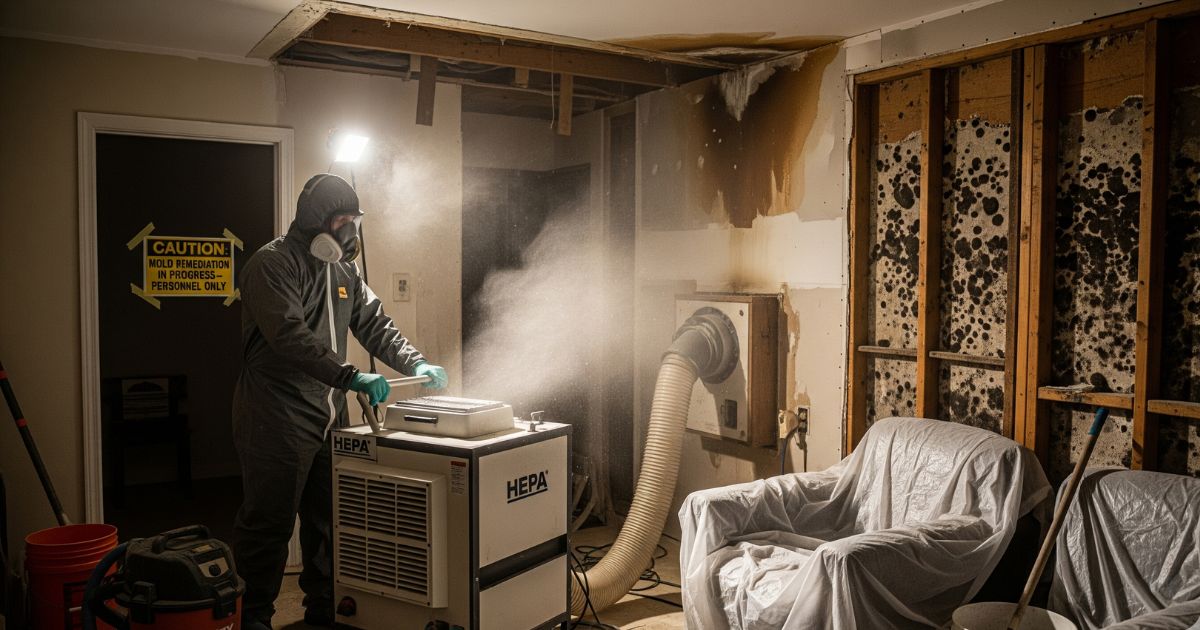
The first step in any professional remediation project is containment. This involves setting up physical barriers, usually made of plastic sheeting, to completely seal off the affected area from the rest of the property. But physical barriers are not enough.
The air pressure inside the containment zone must be controlled. Professionals use machines called air scrubbers to create “negative air pressure.” This means air from outside the containment area is pulled in, but air from inside—laden with mold spores—cannot escape. This is a critical step to prevent cross-contamination.
Continuous Air Purification
During the remediation process, as moldy materials are disturbed, cut, and removed, spore counts in the air can skyrocket. A hepa air scrubber for mold is placed inside the containment zone and runs continuously throughout the project. It constantly draws in the contaminated air, passes it through its filters, and captures the liberated spores. This drastically reduces the airborne threat and makes the entire process safer.
The Final, Critical Clean-Up
After all visible mold has been removed and the surfaces have been treated, a final, detailed cleaning is required. This is where a hepa vacuum for mold remediation becomes the star of the show. Professionals meticulously vacuum every surface inside the containment area—walls, ceilings, floors, and any remaining fixtures.
Using a regular vacuum would be a disaster. Standard vacuums are not sealed and their filters are not fine enough to trap microscopic mold spores. They would effectively act as a spore-blower, collecting large debris but blasting the dangerous microscopic particles back into the air. A true hepa vacuum for mold is a sealed system, ensuring that what goes in, stays in. This is a crucial final step for hepa vacuuming mold remediation.
Decoding HEPA Devices: The Right Tool for the Job
While all HEPA devices operate on the same filtration principle, they are designed for different applications. Understanding the distinctions is key to using them effectively.
HEPA Air Scrubbers: The Remediation Workhorse
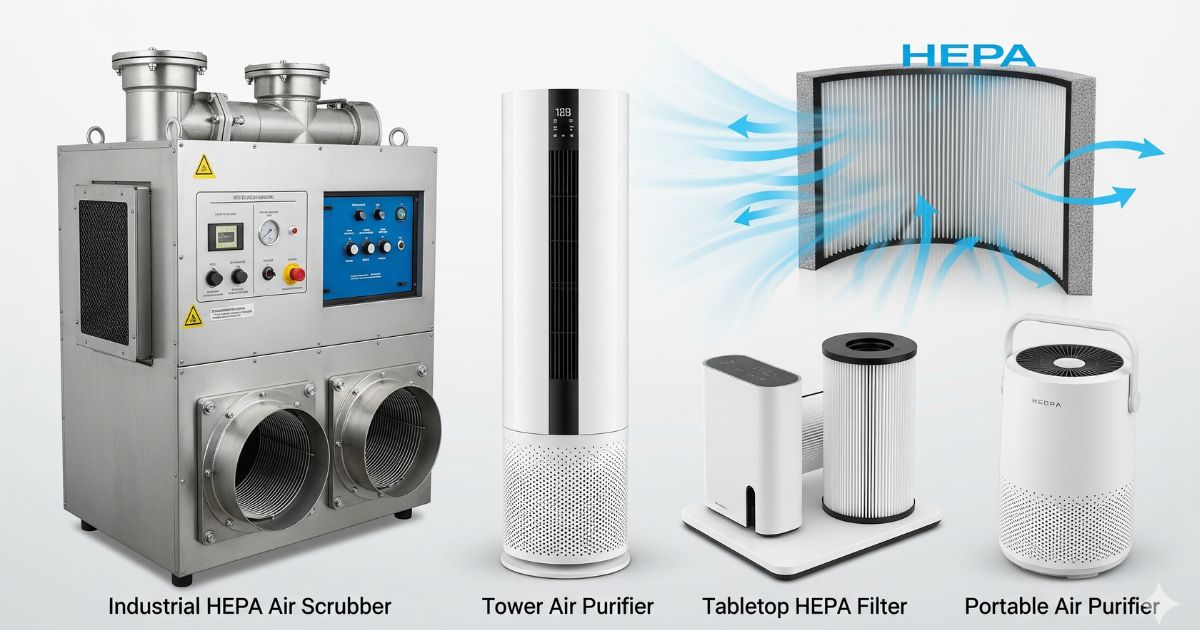
A HEPA air scrubber is a powerful, portable air filtration device built for industrial and commercial use. They are designed to move large volumes of air and withstand the rigors of a construction or remediation site. Their primary role is to clean the air during a project, protecting workers and preventing the spread of contaminants. If you see a remediation project in progress, you will see one of these machines.
HEPA Vacuums: The Detail-Oriented Cleaner
A hepa vacuum for mold is a specialized cleaning tool. The most important feature of a hepa vacuum for mold removal is its sealed design. Many consumer vacuums may have a HEPA filter on the exhaust, but if the vacuum’s body has leaks, contaminated air will escape before it ever reaches the filter.
A professional HEPA vacuum cleaner for mold is designed to be airtight. All air entering the vacuum must pass through the HEPA filter before being exhausted. This is why using the right hepa mold vacuum is essential for the final cleanup phase of remediation. Renting a hepa vacuum for mold rental from a proper supplier is an option for smaller, contained projects.
HEPA Air Purifiers: The Everyday Guardian
While air scrubbers and specialized vacuums are for active remediation, a hepa air purifier for mold is designed for everyday, long-term use in homes and offices. These devices continuously filter the air in a room, maintaining a healthier environment.
Placing the best hepa air purifier for mold in a bedroom or main living area can significantly reduce the ambient level of airborne allergens, including mold spores, dust, pet dander, and pollen. An air purifier with a hepa filter for mold is an excellent investment for overall health, especially for those with respiratory issues. If you are concerned about spores, the best hepa air purifier for mold spores will be one with a high CADR (Clean Air Delivery Rate) appropriate for your room size. A hepa mold air purifier is a proactive tool for a healthier home.
Do HEPA Filters Remove Mold? A Clear Answer
This is the most common question, and it deserves a direct answer: Yes, HEPA filters are extremely effective at removing mold spores from the air.
Let’s be precise. A hepa air filter for mold traps airborne spores. It cannot kill mold that is actively growing on a surface, nor can it address the underlying moisture issue that is allowing the mold to grow in the first place.
Think of it this way: a hepa filter mold spores solution is for the symptoms in the air, not the disease on the wall. So, does a hepa filter remove mold? It removes the spores, which is a critical part of breaking the cycle of contamination. But you must still address the source.
The proper sequence is always:
- Stop the Moisture: Fix the leak, improve the ventilation, or solve the humidity problem.
- Remove the Mold: Have the physical mold colony safely and properly removed.
- Clean the Air: Use HEPA devices during and after the removal to capture all airborne spores.
A hepa filter air purifier for mold is an excellent tool for maintenance, but it cannot solve an active, growing mold problem on its own. It is one part of a comprehensive strategy. The question “can hepa filters remove mold spores?” is a definite yes. Do hepa filters catch mold spores? Yes, with unparalleled efficiency.
Common Misconceptions About HEPA Filters and Mold
There is a lot of misinformation out there. Let’s debunk some of the most common myths.
Myth 1: Any “HEPA-type” filter is good enough.
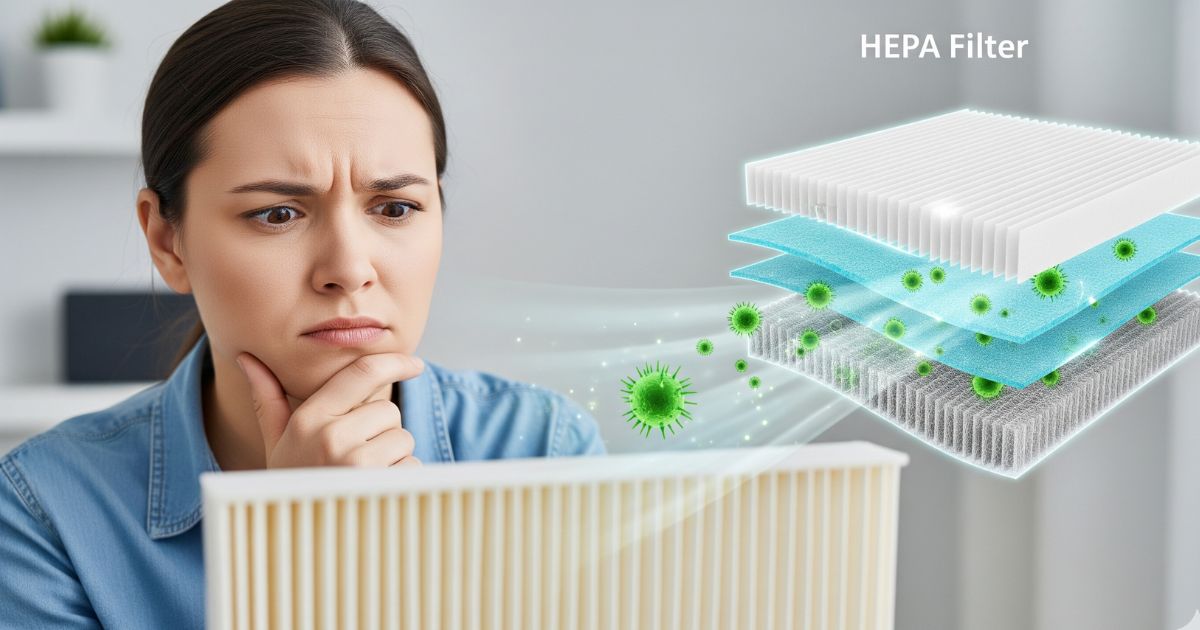
Fact: This is dangerously false. Terms like “HEPA-type,” “HEPA-style,” or “HEPA-like” are unregulated marketing phrases. These filters may capture some larger particles, but they do not meet the 99.97% at 0.3 microns standard. For something as serious as black mold spores, you need the certified performance of a true HEPA filter. Always look for the “True HEPA” designation.
Myth 2: A HEPA air purifier is all I need to fix my mold problem.
Fact: As discussed, a hepa air purifier for mold only cleans the air. If you have a colony growing behind a wall or under a sink, it will continue to produce and release spores. The purifier will capture some of them, but it won’t stop the source. It’s like mopping up a floor while a pipe is still leaking. You must address the source.
Myth 3: HEPA filters kill mold.
Fact: HEPA filters trap mold spores; they do not kill them. The spores remain viable (alive but dormant) within the filter media. This is why proper filter handling and replacement are crucial. If a filter becomes damp, it could theoretically become a breeding ground for mold itself.
Myth 4: I can just put a HEPA filter in my HVAC system.
Fact: While a high-quality filter in your furnace or AC unit is great for general air quality, it’s not a substitute for targeted remediation. Your HVAC system runs intermittently and cannot create the sealed, negative-pressure environment needed for safe mold removal. Furthermore, using a filter that is too dense can strain your HVAC’s fan motor, leading to costly repairs. H13 HEPA filter mold solutions are typically for standalone purifiers, not central air systems.
Myth 5: A good HEPA vacuum is all I need for DIY removal.
Fact: While a hepa vacuum for mold spores is a critical tool, it’s only one piece of the puzzle. Professional remediation also involves containment, negative air pressure, proper personal protective equipment (PPE), and antimicrobial treatments. For any mold issue larger than about 10 square feet (a 3×3 foot patch), a DIY approach is not recommended. You need the best commercial hepa vacuum for mold and the expertise to use it correctly.
A Deeper Dive: How to Choose the Right HEPA Device
Selecting the right HEPA product can be confusing. Here’s a breakdown of what to look for based on your needs.
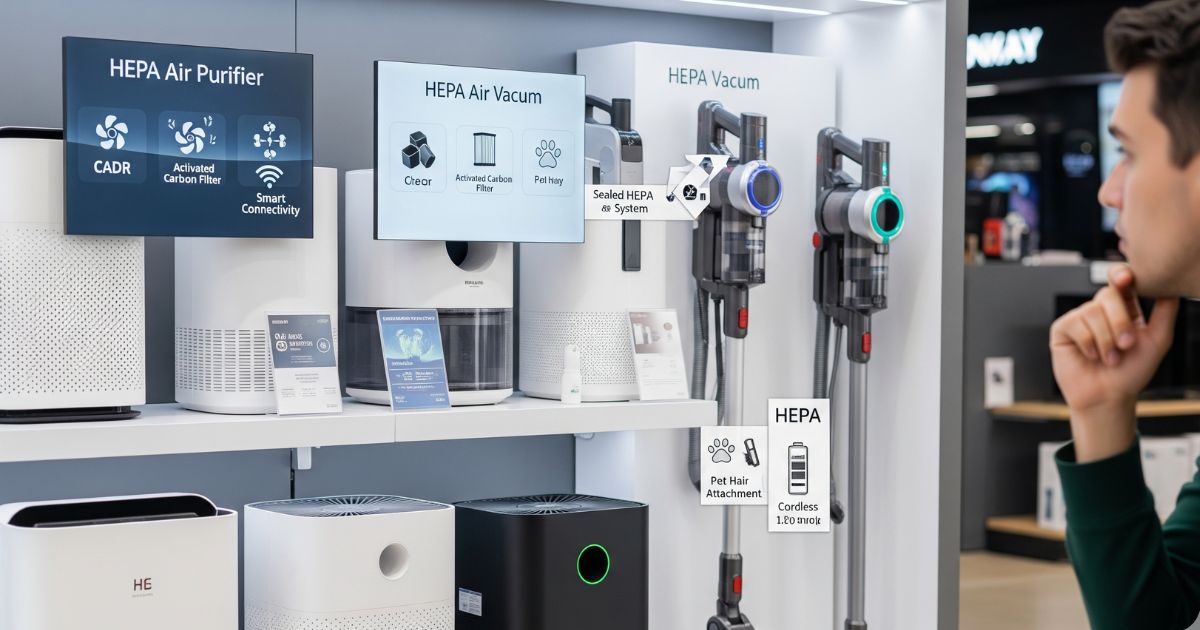
Choosing the Best HEPA Air Purifier for Mold
For daily air quality maintenance, consider these factors:
- True HEPA Filtration: Non-negotiable. Verify this is explicitly stated. Some of the best true hepa air purifier for mold options will specify their efficiency rating.
- CADR (Clean Air Delivery Rate): This metric tells you how quickly the purifier can clean a room of a specific size. Look for a CADR that is at least two-thirds of your room’s square footage. For example, a 150 sq. ft. room needs a purifier with a CADR of at least 100.
- Activated Carbon Filter: Mold often produces musty odors (MVOCs). A unit with a substantial activated carbon filter will help absorb these gases and odors in addition to the HEPA filter capturing the spores.
- Filter Life and Cost: Check the recommended replacement schedule and cost for both the HEPA and carbon filters. This is an ongoing operational cost.
- Noise Level: If it’s for a bedroom, check the decibel (dB) rating on its lower settings.
Selecting a HEPA Vacuum for Mold Remediation
If you are tackling a very small, manageable DIY project, or looking to rent a unit, here’s what defines the best hepa vacuum for mold:
- Sealed System Design: The vacuum must be engineered to prevent air leaks. Look for terms like “fully sealed” or “airtight construction.”
- Certified HEPA Filter: The filter should be individually tested and certified to meet the HEPA standard.
- Durable Construction: A remediation vacuum should be robust enough to handle fine dust and debris without clogging or failing.
- Appropriate Tools: Ensure it comes with a crevice tool, a floor tool, and a brush attachment to clean a variety of surfaces effectively. Using a hepa vacuum for black mold requires thoroughness.
Professional Remediation in Action: A Case Study
Consider a common scenario: a homeowner in West Hartford, CT, discovers a musty smell in their basement. Upon inspection, they find a significant patch of mold on the drywall behind some storage boxes, caused by a slow foundation leak.
A professional team like Mold Master Pro would execute the following steps, highlighting the role of HEPA filtration:
- Assessment: The team first identifies the extent of the mold growth and the source of the moisture. A professional may take air quality samples to establish a baseline spore count.
- Containment: The basement is sealed off from the rest of the house using heavy-duty plastic. A HEPA air scrubber is installed inside the containment zone and turned on to create negative pressure.
- Removal: Workers in full PPE cut out and carefully bag the contaminated drywall and any affected insulation. This process releases a high volume of spores, which the continuously running air scrubber immediately captures.
- Cleaning: All exposed surfaces within the containment—wood studs, concrete floor, etc.—are wire-brushed and then meticulously vacuumed with a sealed mold remediation hepa vacuum.
- Treatment: The cleaned surfaces are treated with an EPA-registered antimicrobial sealant to prevent future mold growth.
- Post-Remediation Verification: After the cleanup, the air scrubber is left to run for another 24-48 hours. A final air quality test is then conducted to ensure the spore count has returned to a normal, safe level. The hepa vacuuming mold remediation is a key step that is checked.
- Reconstruction: Only after the area is verified as clean can the reconstruction process (new drywall, paint) begin.
In this example, the hepa air filter for mold (in the scrubber) and the hepa vacuum for mold removal were not just helpful accessories—they were essential to the safety and success of the entire project.
Maintenance and Care for Your HEPA Devices
Owning a HEPA device is an investment in your health. Proper maintenance ensures it continues to protect you effectively.

Filter Replacement is Key
This is the most critical aspect of maintenance. A clogged filter restricts airflow, reducing the device’s effectiveness and putting a strain on its motor.
- Follow Manufacturer Guidelines: Your device’s manual will provide a recommended replacement schedule (e.g., every 6 months for a carbon pre-filter, every 2-4 years for the main HEPA filter).
- Consider Your Environment: If you live in a home with pets, smokers, or high levels of dust, you may need to change your filters more frequently.
- Handle Old Filters Carefully: When changing a filter that has been trapping mold spores, it’s wise to wear a mask and gloves. Place the old filter directly into a plastic bag, seal it, and dispose of it in your outdoor trash.
Cleaning Your Device
Before changing the filter, unplug the unit. Use the brush attachment of your vacuum cleaner to clean the air intake and exhaust grills. Wipe down the exterior of the unit with a damp cloth. Never wash a HEPA filter unless it is explicitly labeled as “washable” or “permanent,” which is rare for true HEPA filters. Attempting to wash a standard HEPA filter will damage the delicate fiber matrix.
Your Partner in Creating a Healthy, Mold-Free Home
You fight the battle against mold on two fronts: the visible colonies on surfaces and the invisible spores in your air. HEPA filters are the single most effective technology for winning the airborne battle.
They are the cornerstone of safe, professional mold remediation and an invaluable tool for maintaining clean air every day. From the industrial power of a hepa air scrubber for mold during a major cleanup to the daily vigilance of the best hepa air purifier for mold spores, these devices are your ultimate defense against microscopic threats.
If you are facing a mold problem in Hartford County or the surrounding areas, do not leave your family’s health to chance. Contact the experts at Mold Master Pro. We utilize state-of-the-art, commercial-grade HEPA filtration technology and adhere to the strictest industry standards to restore your home or business. We make sure we do the job right, leaving you with a safe, healthy, and truly mold-free environment.
Frequently Asked Questions
Q: Does a HEPA filter remove mold smell?
A: Not directly. The musty smell from mold is caused by Microbial Volatile Organic Compounds (MVOCs), which are gases. A standard HEPA filter traps solid particles, not gases. To remove the smell, you need a purifier equipped with a substantial activated carbon filter, which is specifically designed to absorb odor-causing gas molecules.
Q: Can I just rent a HEPA vacuum and do mold removal myself?
A: For a very small, isolated area of surface mold (less than 10 sq. ft.), a capable DIYer might be able to handle it with proper PPE and a rented hepa vacuum for mold rental. For larger issues, or if the mold is inside walls or HVAC systems, hiring a professional is highly recommended. They have the expertise to ensure complete removal and prevent cross-contamination.
Q: What is the difference between HEPA and H13 HEPA?
A: H13 is a specific grade within the European HEPA standard (EN 1822). It requires trapping 99.95% of particles at the MPPS. While technically a slightly different standard than the US 99.97% at 0.3 microns, for all practical purposes, a device marketed as H13 or True HEPA provides excellent filtration for mold spores. The h13 hepa filter mold performance is top-tier.
Q: Do all HEPA filters remove mold spores?
A: Yes, if it is a “True HEPA” filter. The size of even the smallest mold spores is well within the capture range of any legitimate HEPA filter. The key is to avoid “HEPA-type” filters. So, do hepa air filters remove mold? Yes, as long as they are authentic.
Q: Does a HEPA air purifier help with mold allergies?
A: Absolutely. By continuously removing airborne mold spores, a hepa air purifier for mold can dramatically reduce the concentration of allergens in a room, providing significant relief for those with mold allergies or asthma. It’s one of the most effective ways to create a “safe zone” in your home, especially in the bedroom.